As teachers in the US are returning to school, many are beginning to moan and groan about the overwhelming tide of testing that has engulfed the US educational system. Assessments seem incapable of surviving alone. Within a year, they reproduce like rabbits. Because, of course, you need a test to see if your kids are ready for the BIG TEST. And if one of those tests a year is good, then one per term is even better for progress monitoring. And that test doesn't test everything, so you need to sprinkle in a few others for good measure. Then, of course, the next grade level wants a different assessment from the ones you use, so... You get the idea.
Like it or not, I don't think this frequency of assessment is going away any time soon. It is too convenient a measuring stick for districts, principals, and teachers. And that, my friends is the real wave of the future. In some states, the bottom performing 10% of the teachers in a school must be fired. In my school, assessment data is used to create yearly goals that count as a percentage of our annual performance review. Right now that percentage is small. But it is bound to rise in the coming years.
So, when life gives you lemons, make lemonade! That's right! When your students are required to take yet another test, make it worth it... for both them and you.
Making tests worthwhile to you:
1. Learn as much as you can from the assessment data. If you don't know how to read the assessment data (few of us learned to do this in college), ask your school "data guru". Every school has at least one.
2. Use what you know about your students and how you taught them to interpret the results. Many people rely on others to "read" their data for them, but even the wisest data guru is limited because they don't know your kids and how you taught them. Leave the data gurus to look at the big picture- trends across the grade and grade levels. Only you know whether a weakness the test reveals is because you haven't taught it yet or you did teach it, but your students didn't master it. For example, last year my principal remarked that my Math class was the weakest in the grade level on data, statistics, and probability. Since I had already looked at my own data, I agreed. Then I showed her the results for my class at the beginning of the year. Every child's weakest area was number sense and operations. Since number sense and operations are the foundation of Math, I decided to focus my teaching in this area throughout the year. Yes, because of this focus, something had to give. But, by the end of the year, not a single child had number sense and operations as their lowest area. And the class overall had the third highest level of overall growth in test scores.
3. Know your test data well. Like it or not, your tests scores will be used to assess your teaching ability and compare you to others. Suck it up and be proactive. Be honest about what your data says. Even it's not complemenary, be prepared to say how you will use the data. And find the nugget of wonderfulness in your data, even if it is just one child.
3. Use your assessment data and, when you do, tell your students that you are doing it. Something along the lines of: "Your recent ______________ test showed that ______________. So today we are going to _________ ."
Making test worthwhile to them:
1. Given them information about how they performed last time on the same assessment and what their goal is for this one. A bit of specific advice never hurts.
2. Give students feedback on their performance as soon as possible. Next generation assessments can do this immediately, but don't just be content with a score. Again, here is where your interpretation will be vital. Put it in kid-friendly language. Try to come up with at least one positive comment, such as how hard they worked or how long their written answers were.
I assure you that when you follow these words of advice, your students will do their best on the test. They will become hungry for your feedback.
Showing posts with label assessment. Show all posts
Showing posts with label assessment. Show all posts
Thursday, August 8, 2013

Saturday, July 20, 2013
Assessment Data Binder
This week I have been very busy creating products for teachers. I have to confess that the hot and humid weather here in the Northeast has been behind it. The only comfortable spot is in front of the computers with two fans running! And the last place I want to go is the beach or lake because they are so crowded.
My latest product is a Youtube video titled: Assessment Data Binder.
Many people have asked about how I set up my binder. It certainly is a "hot topic" (no pun intended!). I am very lucky that us fourth grade teachers get a portfolio that includes both numeric assessment data, and samples of student work. I pour over these portfolios in early July to set up my Assessment Data Binder. Having plenty of time to look at the portfolios helps me "hit the ground running" when the school year begins. I definitely make tweaks once I get to know each child individually, but surprisingly I don't need to do that very often. The video has links to my former blogposts where I offer some of the forms for free. If you are interested in the assessment web, please leave a comment below. The writing rubric is part of one of my paid products on Teachers Pay Teachers.
What do you do to keep track of assessments?
My latest product is a Youtube video titled: Assessment Data Binder.
Many people have asked about how I set up my binder. It certainly is a "hot topic" (no pun intended!). I am very lucky that us fourth grade teachers get a portfolio that includes both numeric assessment data, and samples of student work. I pour over these portfolios in early July to set up my Assessment Data Binder. Having plenty of time to look at the portfolios helps me "hit the ground running" when the school year begins. I definitely make tweaks once I get to know each child individually, but surprisingly I don't need to do that very often. The video has links to my former blogposts where I offer some of the forms for free. If you are interested in the assessment web, please leave a comment below. The writing rubric is part of one of my paid products on Teachers Pay Teachers.
What do you do to keep track of assessments?
Wednesday, July 3, 2013
Working On Writing

My "Triple Threat"
A rubric that shows the child's baseline level (black circle), and their goal (green box).
When I score a piece of writing, I copy this rubric and circle the level that they obtained
in the assignment with a colored marker.
So when any assignment is scored, the child can see where they were (black circle),
where they should be (gray box), and where they are now (colored circle).
I just got back from a wonderful workshop sponsored by my school. The training was a continuation on our work with professional learning groups (PLGs). We had complained that we had too little time to really delve into the PLG process that was new to us during the school year. Although we have a common planning time of 45 minutes, most of the protocols we were given were designed for 60 minutes or more. There was a little bit of extra money in our Race to the Top grant, so we used it to work out some unresolved dilemmas using the PLG format.
Our grade level team discussed Writing. Both this year and next, budget cuts have forced us to make do with less paraprofessional support. Paraprofessionals are assigned, not to classrooms or teachers, but to individuals or groups of students. So if none of your students had a goal in a certain subject area, such as Science or Social Studies, you would not have a paraprofessional support during that time. We felt this most impacted our instruction in the area of Writing. It is very rare for any fourth grader in our school to have an IEP goal in Writing because very little writing is done in grades K-3, due to Reading First. Yet many of our learning disabled, language disabled, and ADHD students struggle with the writing demands of fourth grade. In our PLG we discussed methods to refine our instruction in the Writing Workshop to meet the needs of these students, who often need a lot of our time, and yet be fair to other students. To boil down the essence of our discussion, we came up with ways to target our instruction based on goals, increase the amount of differentiation, and empower our writers with a growth mind-set.
And thus my latest TpT product was born! I have worked long and hard the part week on this massive 25-page resource for writing. It is designed for grades 3-8 and draws on the work of Gail Boushey and Joan Moser ("The Sisters", authors of The Daily Five and The CAFE Book) and the work of Lucy Calkins (known for her Units of Study) but it is my own "take" on the work of these fine master teachers. Just some of the things it contains are:
- a detailed, 12-page Launching Guide for the Writing Workshop. All of your instruction for the first seven days is included. You don't have to plan anything. The first seven days are the most important so that you set the tone and standards for the year.
- creative activities like Writing collages, and editing necklaces

- a kid-friendly, baseball-themed Writing rubric

- 6 Trait Super Grouper Form (for creating small groups based on assessment data
- a letter to parents on how to read their child's assessment rubric
The best part is that this product is ON SALE right now for HALF OFF! That's right, followers! If you purchase this product before July 11th you get the sale price. Buy it on July 11th and it goes back to the regular (but still a bargain) price. So why not treat yourself today?
By the way, I'm not done creating new products this summer. by a long shot. Right now I'm working on a daily multi-digit numbers and operations review called "4 in 5". There will eventually be a third, fourth, and fifth grade version. Right now I'm working on the fourth grade version. Click here for a sneak peek!

Tuesday, June 25, 2013
Triangulating Data FREEBIE
I recently finished one of my professional books for the summer: Assessment in Perspective: Focusing on the Reader Behind the Numbers by Claire Landrigan and Tammy Mulligan.

In this book the authors talked about triangulating data. This means taking data from different sources and compare them side-by-side to build a complete profile of a student's strengths and weaknesses. I thought a nice way to do that would be in graph form. So I created a data triangulation form for my Math class. My form is specific to the grade level I teach and the assessments we use. For you, dear reader, I have created a generic form that you can use with any grade level and whatever assessments you use.
Let me know how it works out.
Saturday, June 22, 2013
Steppin' Up Step Up Day
In my school we have a tradition called Step Up Day. Students get to spend an hour with their new teacher. This year the fourth grade team lobbied for an extended time frame with our third graders. They come from a different school and they are all a bit nervous. They are coming from being the oldest to being the youngest in a school. Their test scores take a serious hit because our high-stakes testing is at the beginning of October, before they have fully acclimated to the new school. This year we got to spend an hour and fifteen minutes with our new kids. I wanted to take this extended time to get to know my students both personally and academically. So I choose activities where I could do both. Although I did this for Step Up Day, you could just as easily do these on the first day of school. This is what we did:
Activity: Me, Too!
Time: 15-30 minutes, depending on class size and student interest
Goals: 1. to learn about students interests
2. to assess oral language fluency
Start by seating students in a circle. The teacher starts off first. Stand up and say a short, general sentence about yourself- your favorite food, subject, hobbies, places you have been, pets, etc. I started with: "I have a dog." Anyone who matches that sentence (In my case, they also have a dog) stand up. Next, choose a person to walk up to and elaborate on the sentence. The trick is, I have to use at least 7 words in my sentence. I call this a 7-up sentence. My follow-up sentence was: "I have an adorable Shih Tzu named Louisiana Belle that we rescued from a shelter." The person you go up too also has to say a 7-up sentence about your topic. Once I am done, I sit down, and the person I picked has to say a short sentence on another topic.
Continue playing, encouraging students to choose people that haven't been picked yet. If it happens that you have a student who says a sentence that no one in the classroom has a connection with (I had one student who was taking flying lessons), celebrate that person's uniqueness by giving them a round of applause. And don't forget that 7-up sentence! Eventually you will find that there are a few students who have not stood up or not been called on. Have them stand up and give a 7-up sentence about themselves and give them a round of applause.
As the students play, note which students have a hard time coming up with such a long sentence. Does their oral language lack describing words (particularly adjectives and adverbs)? Do they use specific nouns and verbs? Can they support their statements with phrases, clauses, and linking words like because? Weakness in oral language can indicate difficulties with writing and reading. If you have several students who found this task challenging, you might want to see the Whole Brain Teaching website. There are many videos about creating a classroom with rich oral language.
Activity: Filling Book Baskets
Time: 15-30 minutes
Goals: 1. to learn about students interests
2. to learn which students can pick good-fit books
My own students actually came up with this idea. They really wanted to be a part of showing them around my extensive classroom library and checking to see if the books were good fit. But, alas, they had to be in their sixth grade classrooms at the same time. I learned that most of my class are typical end-of-third grade readers, in that they pick a book based on the cover, not by checking the level as well. Oh well, they will learn!
Activity: Art and Writing
Time: 15-30 minutes, depending on the task
Goals: 1. to learn about students interests
2. to assess their ability to draw with details, handwriting, and task persistence
I wanted an art project that I could display in my classroom to make the students feel welcomed when they arrived in August. I choose Ready-to-Decorate All About Me 3-D Balloons from Really Good Stuff. This had a little drawing and a little writing. Students could make it as simple or as complicated as they wished. It was very open-ended. I learned which students breeze through assignments with shoddy workmanship. I learned which students had trouble with written/multi-step directions. I learned who the artistic students were.
Do you have Step Up Day at your school? What do you do? I'd love your comments below.
Activity: Me, Too!
Time: 15-30 minutes, depending on class size and student interest
Goals: 1. to learn about students interests
2. to assess oral language fluency
Start by seating students in a circle. The teacher starts off first. Stand up and say a short, general sentence about yourself- your favorite food, subject, hobbies, places you have been, pets, etc. I started with: "I have a dog." Anyone who matches that sentence (In my case, they also have a dog) stand up. Next, choose a person to walk up to and elaborate on the sentence. The trick is, I have to use at least 7 words in my sentence. I call this a 7-up sentence. My follow-up sentence was: "I have an adorable Shih Tzu named Louisiana Belle that we rescued from a shelter." The person you go up too also has to say a 7-up sentence about your topic. Once I am done, I sit down, and the person I picked has to say a short sentence on another topic.
Continue playing, encouraging students to choose people that haven't been picked yet. If it happens that you have a student who says a sentence that no one in the classroom has a connection with (I had one student who was taking flying lessons), celebrate that person's uniqueness by giving them a round of applause. And don't forget that 7-up sentence! Eventually you will find that there are a few students who have not stood up or not been called on. Have them stand up and give a 7-up sentence about themselves and give them a round of applause.
As the students play, note which students have a hard time coming up with such a long sentence. Does their oral language lack describing words (particularly adjectives and adverbs)? Do they use specific nouns and verbs? Can they support their statements with phrases, clauses, and linking words like because? Weakness in oral language can indicate difficulties with writing and reading. If you have several students who found this task challenging, you might want to see the Whole Brain Teaching website. There are many videos about creating a classroom with rich oral language.
Activity: Filling Book Baskets
Time: 15-30 minutes
Goals: 1. to learn about students interests
2. to learn which students can pick good-fit books
My own students actually came up with this idea. They really wanted to be a part of showing them around my extensive classroom library and checking to see if the books were good fit. But, alas, they had to be in their sixth grade classrooms at the same time. I learned that most of my class are typical end-of-third grade readers, in that they pick a book based on the cover, not by checking the level as well. Oh well, they will learn!
Activity: Art and Writing
Time: 15-30 minutes, depending on the task
Goals: 1. to learn about students interests
2. to assess their ability to draw with details, handwriting, and task persistence
I wanted an art project that I could display in my classroom to make the students feel welcomed when they arrived in August. I choose Ready-to-Decorate All About Me 3-D Balloons from Really Good Stuff. This had a little drawing and a little writing. Students could make it as simple or as complicated as they wished. It was very open-ended. I learned which students breeze through assignments with shoddy workmanship. I learned which students had trouble with written/multi-step directions. I learned who the artistic students were.
Do you have Step Up Day at your school? What do you do? I'd love your comments below.
Saturday, February 2, 2013
Comprehension Processes: An In-Depth Assessment
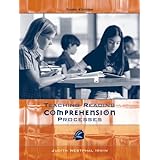
This week I got an opportunity to put her ideas into practice. I have a student, I'll call him Russ, who has not made any progress this year in reading comprehension. His IRIs reveal he can decode and is fluent using on-grade-level materials. I have had him in several skill-specific groups this year, but none has made any difference in his reading comprehension. During Daily Five he frequently abandons books. He doesn't like to read and has no favorite series, authors, or types of books. Even books like Calvin and Hobbes and The Guinness Book of World Records fail to interest him. These behaviors show he is not able to comprehend enough to keep interested in books.
I decided I needed to assess Russ in more depth to discover what was standing in the way of him making progress. I used Irwin's books (Teaching Reading Comprehension Processes and Promoting Active Reading Comprehension Strategies) to create an assessment checklist with one generic question that I could use for any book for each of the sub-skills she lists under each process. Then I found an on-grade-level leveled passage for Russ to read. This week I had him read and answer the question with me orally. As I expected, Russ lacked sub-skills in many different comprehension processes. However, the area where he couldn't answer any questions at all was macroprocessing. He did not have any sub-skills in this area. So this week I have instructed him individually in finding the main idea. We started with identifying the topic sentence in paragraphs.
The assessment is definitely a work in progress. It has made a difference in this student's education and I hope, with some work, it will make a difference in the lives of others.
Thursday, August 2, 2012
Are Tests the Only Measure of Student Learning?
Are Tests the Only Objective Measure of Student Learning?
Howard Gardner speaks about multiple intelligence and testing.
The simple answer to this question is yes. Objective assessments measure correct and incorrect answers. Assessments of this type are common in education because they are quick and easy to arrive at a numeric score or "grade". Numeric scores are easy to rank and compare, which makes them extremely popular in this age of heightened accountability for teachers and schools. However objective assessments can, by their nature, only assess the lowest three levels of Bloom's taxonomy. Those levels are: knowledge, comprehension, and application. The higher three levels (often called "higher order thinking skills") cannot be assessed in a right or wrong format, since they involve the skills of analysis, evaluation, and original creation. The assessment of these skills is subjective in nature. These are the types of skills we want our students to have in the twenty-first century. These are the skills they will need to get and keep a high-paying jobs or to change from one career to another.
Facts and figures are just the jumping off point for higher order thinking. And as teachers we should be in the business of evaluating this cognition, not just the recall of facts and figures. We can leave that for the creators of our high-stakes state testing. In other words, we should evaluate students using a range of assessments. These assessments could include: testing, performance tasks, projects, and observation to name a few (Buzzetto-More and Alade, 2006).
Even that is not enough. These evaluations need to be part of a "Continuous Assessment Loop" (Martell and Calderon, 2005) in order to improve student learning. A Continuous Assessment Loop contains the steps of analyzing the assessment, discussing the results with stakeholders, identifying ways for students to improve outcomes, making instructional changes, and re-identifying goals. I know I have posted her video before, but Jennifer Jones (one of my teacher-heroes) of Lake Myra Elementary in North Carolina and blogger at helloliteracy.blogspot.com demonstrates that CA Loop so vividly in this video:
Technology can make this Continuous Assessment Loop easier for teachers to manage and maintain. Technology is most useful in tracking and analyzing data over time, rubric creation, and storing digital artifacts (Buzzetto-More and Alade, 2006).
References
Buzzetto-More, N.A. and Alade, A.J. (2006) Best practices in e-assessment. Journal of Information Technology Education, Vol. 5, pags. 261-269.
Sunday, July 1, 2012
Lapbooks for Science
Lapbooks for Science
In the hunt to find information about interactive notebooks, I also came upon the idea of lapbooks. Lapbooks are a creative way to present (mount) a series of small foldables that are linked thematically. They are usually made using one or more file folders, but can also be made out of construction paper or posterboard. They can range from relatively simple to extremely complex. Here is an example of one of those extremely complex ones on cells, but don't be intimidated.
http://www.youtube.com/watch?v=xvqjHiNKu2M
Many of the ideas for the foldables come from the world of card-making. I found two really great sites on the web for foldables: Homeschool Share and Mirkwood Designs. And, of course, there is always lots of videos on You Tube about making clever foldables and Dinah Zike's amazing series of books.
Although some lapbooks appear to be a place to store information (more like a portable learning center) and use a lot of pre-printed work, I was interested in how I could turn a lapbook into a culminating project for a unit. I am also on a quest this year to avoid wasting my time slaving over a hot copier, so I wanted to use very few printed materials.
I would love to do some of the super complex lapbooks, but I have twenty students to monitor and purchase supplies for. My lapbook for the culminating project for a Science unit on Weather is one of those simple ones. If the process goes smoothly for this one, I will do others.
 If you would like to make lapbooks with your class, I would highly recommend that you make a "mock-up" before you make an assignment to the class. By making the foldables yourself, you will better understand how to model the process for the students, what tricks and tips to give them, and get an idea about how long it will take to make. Here is my "mock-up" for a fifth grade unit on Weather. I have purposely not done any drawing or coloring, since the students will be graded on the information the provide and their color-coding. The purpose of my mock-up is to show my students placement of the foldables. I don't want them copying information from me. From the time this one took, I am going to allow two, forty-five class periods, one for the outside and inside center pages, and one for the four foldables on the two inside "leaves".
 In addition, I am going to do a couple of the foldables separately during earlier lessons in the unit so all they have to do that day is glue them in. Any work that still needs to be done will be homework. I made a rubric to go along with this project, too.


Me on the web:
Class Website: www.4mrsjones.110mb.com
Podcasts: http://frommrsjones.podbean.com
You Tube Channel: mrsc4jones
In the hunt to find information about interactive notebooks, I also came upon the idea of lapbooks. Lapbooks are a creative way to present (mount) a series of small foldables that are linked thematically. They are usually made using one or more file folders, but can also be made out of construction paper or posterboard. They can range from relatively simple to extremely complex. Here is an example of one of those extremely complex ones on cells, but don't be intimidated.
http://www.youtube.com/watch?v=xvqjHiNKu2M
Many of the ideas for the foldables come from the world of card-making. I found two really great sites on the web for foldables: Homeschool Share and Mirkwood Designs. And, of course, there is always lots of videos on You Tube about making clever foldables and Dinah Zike's amazing series of books.
Although some lapbooks appear to be a place to store information (more like a portable learning center) and use a lot of pre-printed work, I was interested in how I could turn a lapbook into a culminating project for a unit. I am also on a quest this year to avoid wasting my time slaving over a hot copier, so I wanted to use very few printed materials.
I would love to do some of the super complex lapbooks, but I have twenty students to monitor and purchase supplies for. My lapbook for the culminating project for a Science unit on Weather is one of those simple ones. If the process goes smoothly for this one, I will do others.


Me on the web:
Class Website: www.4mrsjones.110mb.com
Podcasts: http://frommrsjones.podbean.com
You Tube Channel: mrsc4jones
Subscribe to:
Comments (Atom)


 Posts
Posts


