CLICK HERE FOR FREE BLOGGER TEMPLATES, LINK BUTTONS AND MORE! »
Showing posts with label reading comprehension. Show all posts

Saturday, May 11, 2013

Meeting the Needs of Advanced Students

     As much as I love Daily Five, I do miss the guided reading groups from the past.  I felt I accomplished a lot when I got to see two or three groups each day.  There are times that I would like to meet with more than one group, but I haven't been able to get my head around how I could make that happen.  That is until I purchased this new book by Evan-Moor:
 (This book comes in several different grade levels.  
Click HERE and it will take you to Amazon for more information.)

     I am a big fan of Evan-Moor's learning game books.  They have books for Reading, Vocabulary, Science, Writing, Math, and Geography.  All the materials are in full color and ready to use, which makes the games extremely quick and easy to put together.  They are also one of the few publishers that have learning games for the upper elementary grades.  
     In addition to the learning games in this book, it has answer keys and, most importantly, short assessments for each game.  It was the assessments that really got me thinking.  My advanced students are very hard-working and conscientious.  They are willing and capable of playing a game independently, but just having them play a game unsupervised does not hold them accountable enough.  So, using this resource, I decided to assign them a game each day, have them complete the matching assessment, and check themselves using the answer key.  The short assessments will keep them accountable for learning and the self-checking component will make it less work for me. :)
     The end of the year is a great time to try out new strategies that you may want to adopt for the entire year next year.  It's especially important during the "doldrums" after high-stakes testing to keep students motivated for the rest of the year.  Changing things up a bit can breathe new life into you students.  
     What kinds of things are YOU trying out in the last few weeks of the year?  How do you use learning games in you classroom?  How do you keep students accountable for information learned through game play?  I'd love to hear from you!

Thursday, April 4, 2013

T.E.E.R.

No, dear reader, I did not misspell the title of my post.  T.E.E.R. is an acronym to help my students reach new heights in answering open response questions about the main idea in non-fiction.
It all started with the book Close Reading of Informational Text by Sunday Cummins.
 
In this book Cummins gives a lot of great lessons for teaching students how to find the main idea in non-fiction.  She like to emphasize the strategy of synthesis, which she teaches by using a framed photograph.  Showing the students a framed photo she asks:  Of all the photos I own, why did I decide to frame this one?  Students start with the details in the picture and then use synthesis to help them understand the significance of these details.  This leads to why the picture was framed.
As I was reading this book, I did some synthesis of my own.  We have been learning about non-fiction text structures for the past two months.  I realized that knowing the text structure gives us a huge clue as to the main idea.  By adding the strategy of synthesis, we can understand the significance of the details in the text.  And, finally, we can show off all these strategies by using T.E.E.R.:
T = TTQA (turn the question around)
E = evidence from the text
E = explain why this evidence is significant
R = restate the TTQA
 I combined all of this information on a poster for my students showing how we start with a "mission", then use the text and a strategy to create a well-written open response.  Although I have talked about all these things before, I have never combined them with this kind of explicit teaching before.  The initial results have been outstanding!
What kind of skills can YOU combine together?
To conclude, no post would be great without a FREEBIE.  I created this worksheet to help my advanced students improve their sentence fluency.  I listed eight words that begin complex sentences.  These are words like although, after, if, since, and because.  Students fill in the rest of the sentence after the complex modifier.
 

Saturday, February 2, 2013

Comprehension Processes: An In-Depth Assessment

     Product Details
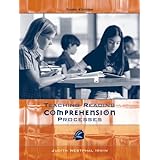
     I have long been interested in the work of Judith Westphal Irwin, an expert on reading comprehension.  She divides comprehension into five dimensions or processes:  microprocessing (chunking individual words into phrases), integration (connecting sentences and paragraphs), macroprocessing (the main idea), elaboration (making more of a text), and metacognition (the ability to know that your thinking has gone awry and how to fix it). 
     This week I got an opportunity to put her ideas into practice.  I have a student, I'll call him Russ, who has not made any progress this year in reading comprehension.  His IRIs reveal he can decode and is fluent using on-grade-level materials.  I have had him in several skill-specific groups this year, but none has made any difference in his reading comprehension.  During Daily Five he frequently abandons books.  He doesn't like to read and has no favorite series, authors, or types of books.  Even books like Calvin and Hobbes and The Guinness Book of World Records fail to interest him.  These behaviors show he is not able to comprehend enough to keep interested in books.
     I decided I needed to assess Russ in more depth to discover what was standing in the way of him making progress.  I used Irwin's books (Teaching Reading Comprehension Processes and Promoting Active Reading Comprehension Strategies) to create an assessment checklist with one generic question that I could use for any book for each of the sub-skills she lists under each process.  Then I found an on-grade-level leveled passage for Russ to read.  This week I had him read and answer the question with me orally.  As I expected, Russ lacked sub-skills in many different comprehension processes.  However, the area where he couldn't answer any questions at all was macroprocessing.  He did not have any sub-skills in this area.  So this week I have instructed him individually in finding the main idea.  We started with identifying the topic sentence in paragraphs. 
     The assessment is definitely a work in progress.  It has made a difference in this student's education and I hope, with some work, it will make a difference in the lives of others.

Sunday, July 8, 2012

Students with Poor Comprehension

Helping Students Who Lack Comprehension During Individual Conferring

It has happened to every intermediate grade teacher.  That dreaded moment when you sit down with one of your little friends... and it's obvious that he/she is not comprehending.  Your heart just sinks.  It is certainly a difficult moment and your response can either turn this student around or lead to years of problems.  But at that moment, all you feel like is a deer in the headlights.  There are so many things you could do, but which is right?
1.  Be honest... and proactive.  Say, "It looks like you are missing a lot of the important information in this book. Let's see if we can figure out what the problem is.  Are you willing to help me out or should be put aside this book for a later time?"  I know this sounds heartless, but we just can't have kids continue to read a book they are not comprehending- no matter how popular it is, no matter how much they want to read it.  The child needs to know that, if you can't figure out what the problem is and fix it together, reading this book is just not an option right now.
2.  Check the books reading level against the child's.  If the level is too high for the child, be brave and tell them they can't read it...YET.  Go over to the bin that had the book and help them find a lower level alternative.  This is why it is best to arrange your classroom library thematically, rather than by level.  I put the child's independent level on the top of my conferring page so I always know it.
3.  If the level is right, do a 1 minute fluency check.  Have the child start at the top of the page and read for one minute.  While they are reading, listen for their prosody (expression and use of punctuation).  After they are done, count the words.  I keep a piece of paper in my pensieve with all of the wpm goals for different reading levels.  If they read too slowly or with lack of prosody, go back to step 2.
4.  If the level and fluency are OK, back up and reread.  Find the part of the book where the child had good comprehension.  Mark it with a stickee.  Have the child read from there.  Make sure they commit to reading differently the second time, otherwise they will get the same result.  This means they have to verbalize a strategy.  Model if they need encouragement and write it on the stickee.  Here's the important part:  Check back with them at the end of the time period to see if comprehension has improved AND...
5.  Have the child put a second stickee when they finished and hand it to you.  Congratulations, teacher!  You now have homework.  Your homework is to figure out why this child is loosing comprehension.  Read the story (preferably from the beginning) with a critical eye and see if you can come up with one strategy the child can do to improve their comprehension.  At this point, the strategy will probably need to involve writing something down since just thinking wasn't enough. With one child, I found that the book had six completely different main characters.  I had to write them down, along with a little blurb, to remember them all!  I suggested she do the same. Once she did, she came to the conclusion on her own that the book was too hard.  Another little friend of mine was having a hard time with a historical fiction book set at the time of the Revolutionary War.  I realized he needed a better understanding of this time period to understand the events of the book.  I suggested he take a break from the book and read "If You Lived During the Revolutionary War". He did and, when he went back to the book, he found his comprehension much improved.
6.  Whether you are able to come up with some specific strategy or not, plan on meeting briefly every day with this child until their issues are resolved with this book or they choose a better book.  How do you manage this brief, but intense, support?  Have your regular reading group go to your group spot and read their choice book while they wait for you.  Do a brief check in with your targetted child.  Find out what page they are on and have them summarize the book so far.  Also have them commit to a strategy.  If all seems well, send them off to read.  Run your small group.  Check in with your targetted child once more, either during their reading or at the end of the reading time. Doing this will force them to become a more active reader because you are raising the level of accountability.  With most children, I find three days in a row is enough.  After that, gradually reduce the level of your support.
Class Website:  www.4mrsjones.110mb.com
Podcasts:  http://frommrsjones.podbean.com
You Tube channel:  mrsc4jones
Pinterest boards:  http://pinterest.com/c4jones
Check out my Teachers Pay Teachers Store!